
BatterUP
Scalable microwave process recycles spent lithium-ion battery cathodes into high-performance, cost-effective domestically-produced materials
Business Problem
The lithium-ion battery (LIB) industry relies on critical materials (CMs) like cobalt and nickel, mostly sourced from a few countries. This creates supply chain vulnerabilities and geopolitical risks. Meanwhile, spent LIB cathodes accumulate as waste, a largely untapped domestic resource. Conventional recycling methods either destroy the cathode structure to extract CMs or preserve the
structure but fail to recover CMs. These methods consume significant energy, generate hazardous waste, and cannot effectively remove defects and impurities that degrade performance compared to virgin materials. This limits the commercial viability of recycled cathode production in the U.S.
Customer Need
Customers need reliable, cost-effective methods to recover and upgrade cathode materials from spent LIBs. They seek processes that decrease reliance on imported CMs, reduce energy consumption, and produce cathodes compatible with evolving industry standards. The industry requires methods to remove impurities and heal microstructural defects to produce high-quality recycled cathodes that perform like new. Flexible tuning of cathode composition, such as nickel enrichment, is necessary to meet rapidly changing standards. Recycling innovations must integrate seamlessly with existing recycling infrastructure to reduce operational costs. Additionally, the process must support domestic supply chain resilience. Customers demand scalable, economically viable processes that de-risk investment in U.S. battery recycling and manufacturing.
Sandia Approach
Researchers at Sandia National Laboratories developed BatterUP, an R&D 100 Award Finalist in 2026. This microwave-based process rapidly and inexpensively converts spent lithium-ion battery cathode materials into nanosheets, cutting conversion time from seven days to two hours with a 95 percent yield. The microwave reactor uses selective heating to exfoliate cathode powders, enabling efficient extraction of critical materials without destroying the structure. Ion exchange substitutes cobalt with
nickel and tunes composition. Nanosheet formation removes impurities and heals microstructural defects that cause recycled materials to underperform, addressing a key limitation of current methods. The process then reassembles nanosheets into bulk, commercially ready cathode powder, preserving nanoscale benefits without added costs or handling challenges. BatterUP’s low-temperature, scalable
process serves as a “drop-in” solution compatible with existing recycling plants.
Competitive Advantage
BatterUP uses a soft-chemical microwave process that preserves the cathode’s crystal lattice as nanosheets, unlike current methods that destroy it. Exfoliation completes in hours with more than 95
percent yield—compared to 60 percent for conventional heating—without intermediate washing, drying, or agitation. Impurity phases don’t exfoliate and self-separate without extra energy. A galvanic ion exchange converts old cathodes into new formulas tailored to market demands while recovering cobalt and nickel as byproducts, effectively creating two cathodes for the price of one. Selective microwave heating is a low temperature process that avoids energy-intensive ovens and lowers costs. BatterUP offers an energy efficient alternative with potential to boost recycling profits by at least 30 percent.
Next Steps
Sandia is seeking partners to develop and commercialize this technology. For more information, please contact Sandia National Laboratories’ Licensing and Technology Transfer office.
- Efficient Microwave Reactor: Selective microwave heating uniformly breaks down cathode powders into nanosheets.
- Nanosheet Formation: Creates structures that maximize ion exchange efficiency and removes impurities with no extra process steps or energy cost.
- Ion Exchange Capability: Selective swapping of cobalt with nickel aligns cathode chemistry with evolving market trends.
- Scalable and Adaptable: Potentially applicable to other layered intercalation cathodes such as those in sodium-ion and zinc-ion batteries.
- Cathode Manufacturing: Recovered critical materials and scrap feed directly into the process. Stable nanosheets (6+ months in water) could serve as drop-in cathode precursors (pCAM), enabling large-scale manufacturing and adding high-value products to existing operations.
- Battery Recycling: Reduces waste and resource dependence. A co-located microwave module boosts profits without new plants, while impurity removal de-risks products for buyers.
- Electric Vehicles: Strengthens supply chain resilience with domestic cathode materials. Nickel-rich recycled formulas meet current performance and recycled-content standards.
- Grid Energy Storage: Provides sustainable cathode materials for large-scale energy
storage. - Critical Materials Supply Chain: Supports resilient, sustainable cathode material sourcing for energy storage and manufacturing.

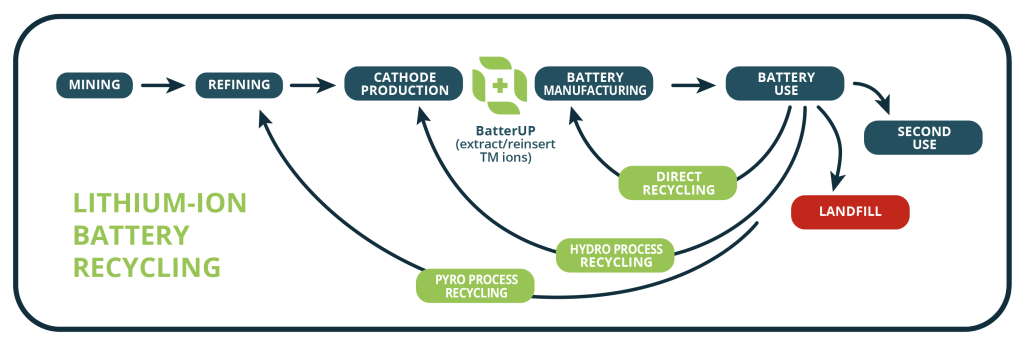
destroys the entire oxide structure, and state-of-the-art direct recycling, which retains 3-
D oxide structure but cannot change the transition metal ratio.
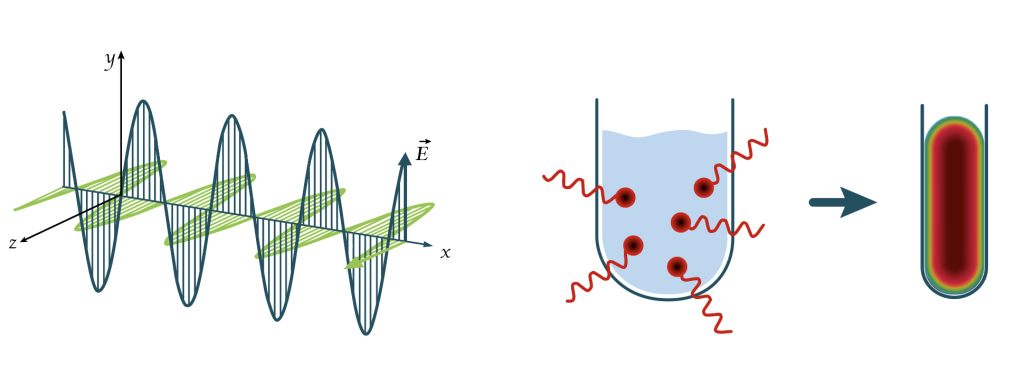
reaction, reducing processing time from one week to two hours while using mild conditions
that consume less energy and are safer for users.
- “Mining batteries, in a microwave,“ Sandia Lab News release (June 18, 2026)
- R&D100 Finalist for 2026
SD 16932 and SD 17126
Published9/10/2026
Last Updated9/10/2026